When everything is “normal”
What happens when routine tests say everything looks fine, but you still don’t feel like yourself?
I.The Starting Point
There are few experiences more frustrating than knowing something is wrong while being repeatedly told that everything is fine.
When this client first came to NAKŌRA, her symptoms seemed everywhere. She was struggling with persistent bloating, stomach pain, nausea, migraines, fatigue, anxiety, PMS symptoms, intense itching and weight loss resistance. Eating had become a source of stress because she never knew how her body would respond afterwards. Some days the discomfort was manageable. Other days it wasn’t. The symptoms were affecting her daily life and her performance.
Like many people, she had already done what she was supposed to do. She sought medical advice. She underwent conventional testing. She looked for explanations. Yet, despite how real the symptoms felt, she repeatedly heard the same response: her bloodwork looked normal. The bloodwork from her doctor’s office didn’t provide an explanation for her symptoms. Yet, the symptoms remained. And over time, she began to question herself; not because her symptoms disappeared, but because nobody could explain why they were happening.
She knew something wasn’t right. She just didn’t know why.
The symptoms were only part of a much bigger picture.Not sick enough to receive answers.
Not healthy enough to feel well.
Always caught somewhere in between.
II.Connecting the Dots
When we began working together, we approached the situation differently. Rather than asking which symptom needed to be suppressed next, we asked a different question:
What is preventing the body from functioning
the way it was designed to?
multiple virulence factors Elevated
opportunistic
bacteria Reduced
digestive
capacity Gut ecosystem
disruption Impaired
detoxification Multiple
interacting
stressors
Through comprehensive functional testing, a different picture began to emerge. Significant H. pylori overgrowth with multiple virulence factors. Elevated opportunistic bacteria. Reduced digestive capacity. Disruptions in the gut ecosystem. Impaired detoxification pathways. Multiple stressors interacting with one another and creating dysfunction across multiple systems at once.
What appeared to be a collection of unrelated symptoms began to look more like interconnected signals.
Her symptoms were never isolated events; they were signals of a much more complex and interconnected process unfolding beneath the surface.
Rather than chasing each symptom individually, we focused on understanding what the body was trying to desperately communicate, and supporting the systems that needed attention most. Using those findings as a roadmap, we then developed a personalized protocol centered around:
Vitality
III.From Surviving to Thriving
Five months later, her experience of daily life changed substantially. One customized protocol had created meaningful changes in how she felt, functioned and moved through everyday life.

Greasy stools and digestive dysfunction

Improvement in digestion and stools

Low energy, fatigue, PMS symptoms and acne

Nearly all presenting symptoms eliminated

Weight loss resistance

Nearly all food related symptoms eliminated

Elevated opportunistic bacteria
Elevated β-glucuronidase

The change went beyond the symptoms themselves. Food no longer felt like something to fear, and she was able to move through daily life with more energy and confidence in her body. She also lost fifteen pounds naturally despite eating more; not because weight loss was the goal, but it simply became one of the many changes that occurred as her overall health improved.
But the changes weren’t limited to how she felt. When we retested five months later, the improvements she was experiencing in everyday life were reflected in measurable changes across her lab results.
The goal was never to chase individual numbers or create a “perfect” lab report. It was to improve the underlying environment that had contributed to dysfunction in the first place. The retest gave us a second lens through which to see her progress: what she was experiencing on the outside was being reflected by meaningful changes on the inside.
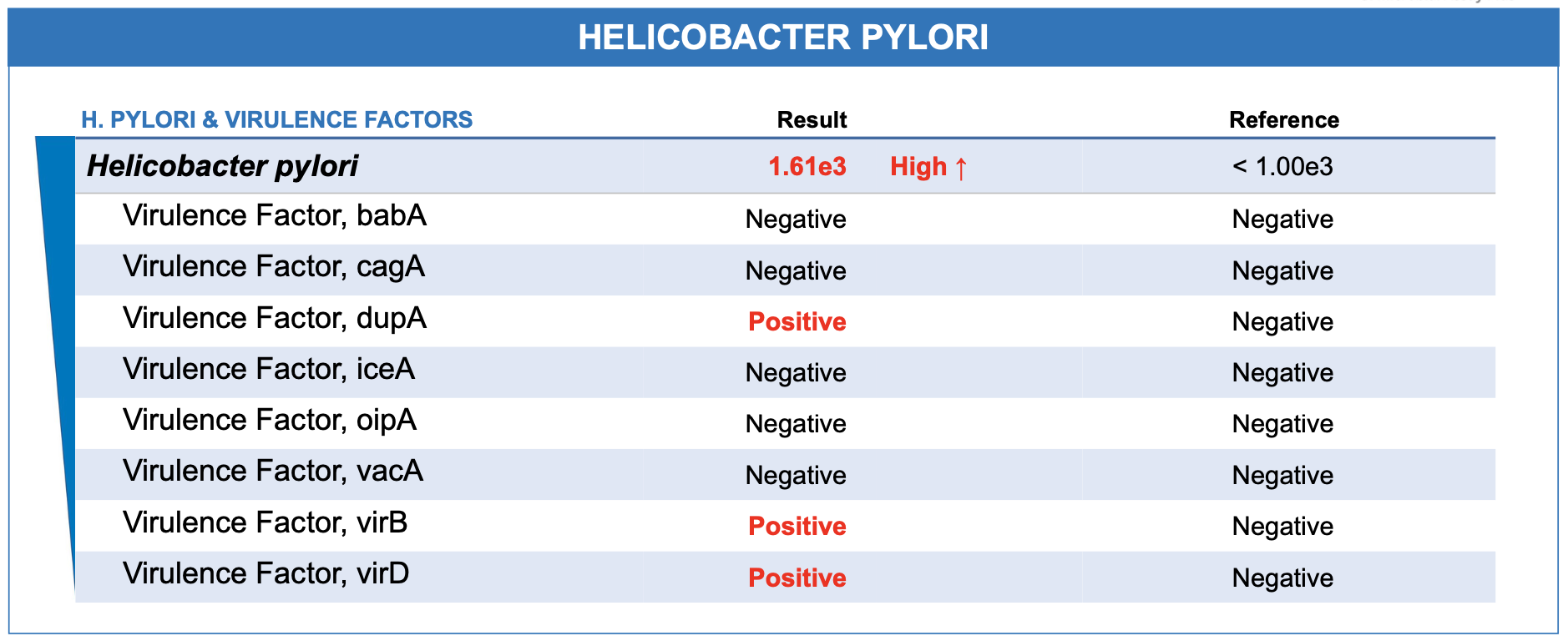
The initial testing revealed a significant H. pylori overgrowth alongside multiple virulence factors. These virulence factors can increase the organism’s ability to persist, interact with the stomach lining and promote inflammation, making this finding particularly significant within the context of her digestive symptoms.
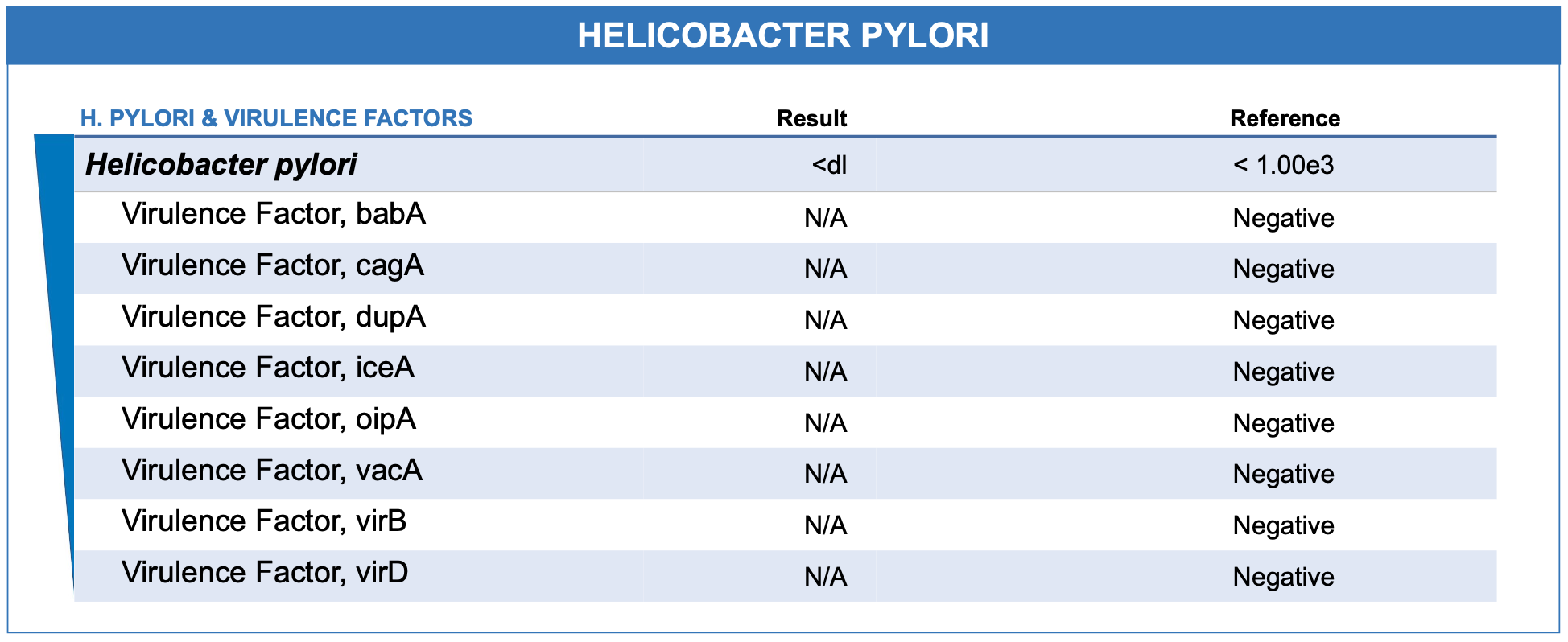
On retesting after the protocol, H. pylori and the previously identified virulence factors were no longer detected. This change occurred alongside the disappearance of her stomach pain, post-meal bloating and nausea, as well as significant improvements in her overall digestion. Together, these changes reinforced the connection between what we were seeing in her labs and the improvements she was experiencing in everyday life.
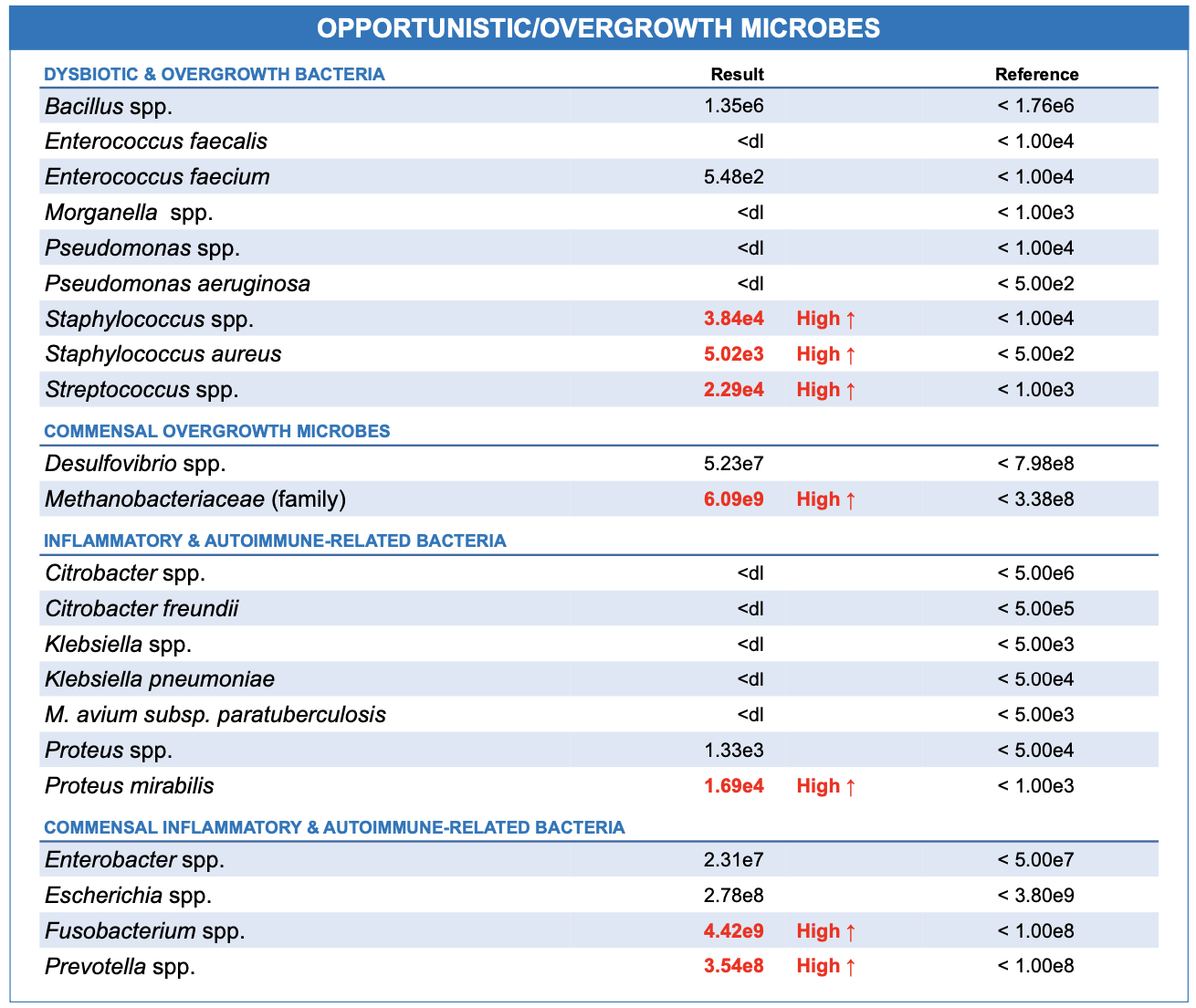
The initial testing revealed a broader imbalance within the gut ecosystem, with seven different bacterial markers elevated above their respective reference ranges. Rather than viewing each elevation in isolation, the overall pattern suggested an intestinal environment in which multiple potentially problematic microbes had been able to proliferate beyond desirable levels.
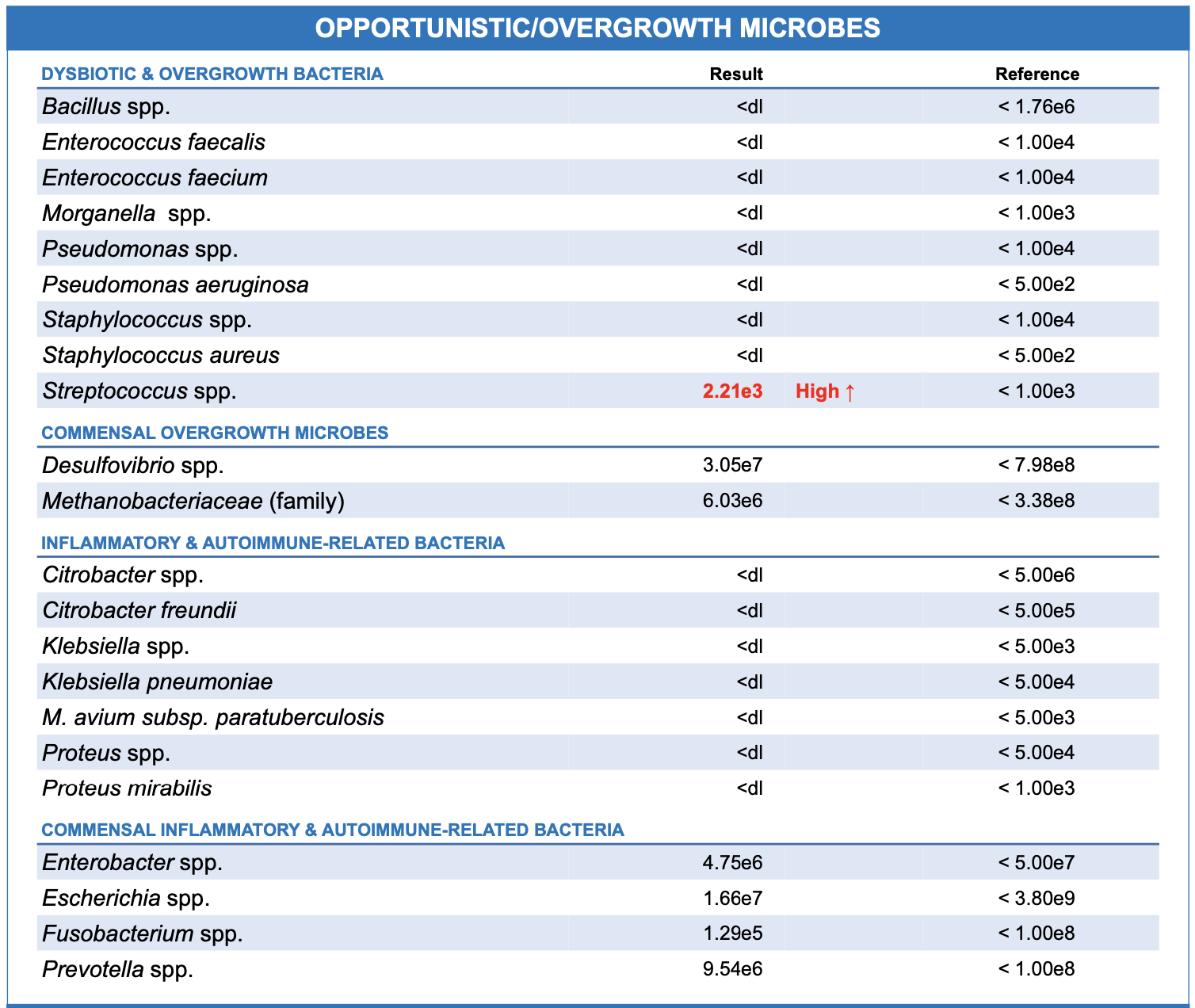
On retesting after the protocol, six of the seven previously elevated markers had returned to their respective reference ranges or were no longer detected. The one remaining elevation had also decreased by more than 90%, showing substantial improvement while also highlighting that there was still room for continued support.
The objective was never simply to eliminate individual bacteria. It was to help change the intestinal environment that allowed these imbalances to develop in the first place. The shift in her microbiome alongside the dramatic improvement in her symptoms gave us two different ways of seeing the same thing: her internal environment had fundamentally changed.


The initial testing revealed significantly elevated β-glucuronidase, an enzyme produced by certain gut bacteria that influences how efficiently the body eliminates substances it has already processed. When levels are too high, some of these substances (including certain hormones) may be reabsorbed rather than eliminated as intended.
In the context of her PMS symptoms, digestive issues, fatigue and difficulty losing weight, this gave us another important piece of the overall picture and highlighted the importance of supporting not only the composition of her microbiome, but also how effectively her gut and elimination pathways were functioning.
Her initial level of 4,296 U/mL fell to 843 U/mL after the protocol, a reduction of more than 80% and well within the laboratory reference range. The significance of this change extended beyond bringing another number to be within the reference range. It suggested a meaningful shift in microbial activity and in the intestinal environment responsible for processing and eliminating compounds from the body. This change occurred alongside improvements in her digestion, energy and PMS symptoms. It was another indication that the changes taking place in her gut were having an impact far beyond digestion alone.
<dl = below the detection limit
Individual results may vary. The outcomes presented in this case study reflect one client’s individual experience and are not a guarantee of similar results. Every person’s health history, biology, lifestyle, circumstances and response to an individualized protocol are unique, and outcomes will vary accordingly.
IV.The Turning Point
The most meaningful outcome, however, wasn’t found on a lab report. It was the confidence that came from finally understanding what had been happening all along.
What began as a search for relief became something much deeper: a new understanding of how health is created. Because the goal was never simply to eliminate symptoms. The goal was to restore the conditions that allow the body to function the way it was designed to.
And when that happens, remarkable things often follow.
This was the real transformation.
V.The NAKŌRA Approach
This is why NAKŌRA exists.
Not to chase symptoms or offer temporary fixes, but to understand what lies beneath them.
NAKŌRA was created with a different approach to health. We believe that lasting wellbeing begins with understanding what is happening beneath the surface. By identifying and addressing underlying imbalances, we aim to restore the conditions that support the body’s natural ability to function well, helping people regain their health and vitality.
The body’s systems do not function in isolation. They are deeply interconnected, and when symptoms persist, understanding these relationships can reveal what looking at each symptom individually might miss. Our work begins there, where we then seek to:
When we stop treating symptoms in isolation and begin supporting the body as an interconnected system, remarkable things become possible.
We believe thatyou were built for morethan just managing symptoms